


St Eriksplan 3
113 21 Stockholm
Sweden
Things Got Weird is a weekly newsletter from Johan Ronnestam that helps you stay ahead of the future. Weird news. Real consequences. Every Monday.
Hey all.
The singularity is moving in hyperspeed. This week it was not just talk. A spaceship landed. A 167 year old maths problem fell. WOW.
Seven stories and a bonus. Bring coffee.
Let's get weird.
1. SpaceX Caught a Spaceship With Chopsticks. Every Old Industry Should Watch This.
Wow. Just wow.
Press play. That is a spaceship the size of a tower block, falling out of the sky and into a pair of giant steel arms. SpaceX calls them the chopsticks.
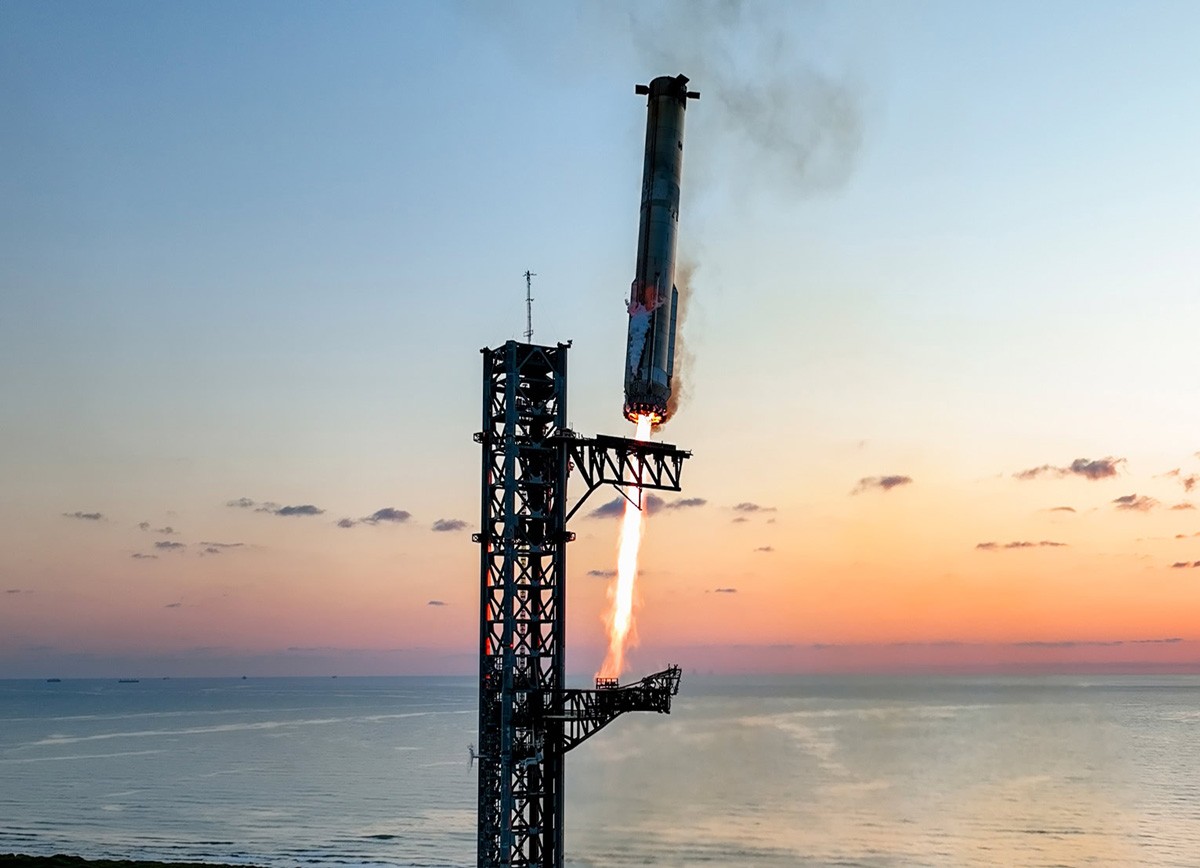
It had just done fourteen laps around the planet. Nobody has ever brought the top half of an orbital rocket home like that. The booster missed this time and went for a swim.
Here is what I love. The rocket business had sixty years of practice and one rule nobody questioned: you use a rocket once. Then somebody walked in from outside, asked why, and built the technology to prove the rule wrong.
New eyes. Old industry.
And the cheekiest part? Starship is still a test rocket. But it dropped off 26 real Starlink satellites on the way. The test flight already does REAL WORK.
Crazy? Yes. Working? Also yes.
2. Claude Solved the Hardest Problem in Maths in Six Weeks. Your Hardest Problem Is Next.
Stop. Read this one slowly.
The Riemann hypothesis. Asked in 1859. The best brains on Earth tried for 167 years. Nobody got there.
Terence Tao, one of the world's leading mathematicians, once called it "impossibly difficult to solve".
Then Levent, a mathematician at Anthropic, sat down with Claude. The proof took six weeks to build.
It is 17 million lines long. In plain English it would fill 250,000 pages. No human can read that in a lifetime. So computers checked it. Line by line. The people who build the checkers say they have full confidence that it is correct.
Now the part that matters to you. Prime numbers will not heat your house. But a problem too big for any human head got solved anyway. That was always the real limit. Not the facts. How much one brain can hold.
That limit is GONE.
So point the same machine at fusion. Batteries. Cancer. Alzheimer's.
Solved energy. Cured diseases. This is how it starts.
Understood by humans? Not yet. The start of something huge? YES.
3. GTA 6 Made 3.79 Billion Dollars in One Day. And I Don't Even Like the Game.
Confession. I don't really like violent games.
But I can't stop staring at the numbers.
Rockstar says the game sold for an estimated 3.79 billion dollars worldwide in its first 24 hours. 32.5 million copies were sold before it was even out. The last one made about 800 million on day one.
One product. One day. 3.79 BILLION.
You don't have to like the game to learn from it. Everything else in this issue is machines doing things on their own. This is people. Years and years of people. When anyone can generate content in seconds, the thing that took a decade to build is worth more, not less.
And what did the fans really buy? Not news. Waiting.
My kind of game?
No.
My kind of case study? Absolutely.
4. This Robot Has No Chips, No Motors and No Software. It Runs at 17 km/h.
I love this one.
Engineers at UC San Diego 3D printed a six legged robot in one piece of soft material. Air goes in. Legs go. That is the whole machine. It still needs an air hose, so it will not chase you far.
Steam engine thinking. Sprinter speed.
No assembly. It comes off the printer ready to run.
For twenty years we fixed every problem by adding electronics. This team took everything out and went faster. The function sits in the shape. Nothing to update. Nothing to hack. Nothing to charge.
Simple? Very. Stupid? Not at all.
5. MIT Built a Robot Bee That Finds Its Own Way to a Sunflower.
Count the grams. 1.29.
MIT has built a flying robot that carries its own sensors and its own little brain. Until now, tiny robots like this could only fly in labs full of cameras that told them where they were. This one works it out alone. It flew out of the lab zone and landed on a sunflower.
A robot bee with a sense of direction.
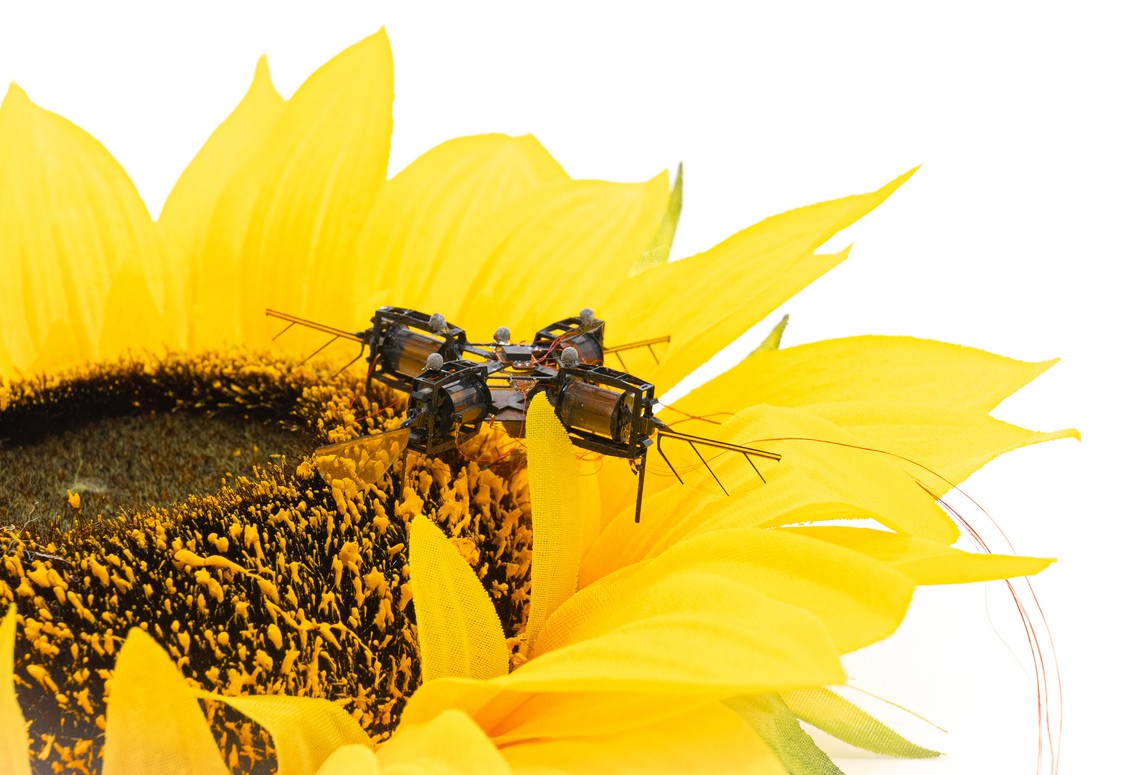
It still gets its power through a wire, and a human points the way with a joystick. But this is not about cheaper work. It is about work no machine could do before. Too small. Too fragile. Too tight.
Ready for the fields? No. On its way? Yes.
6. Uber Eats Now Lowers Your Dinner From the Sky on a String.
Finally. The future they promised us.
In a suburb outside Houston you can now order food in the Uber Eats app and get it delivered by a Zipline drone. The drone stays high up and lowers a small pod on a line. Right onto your driveway.
Dinner. On a string.
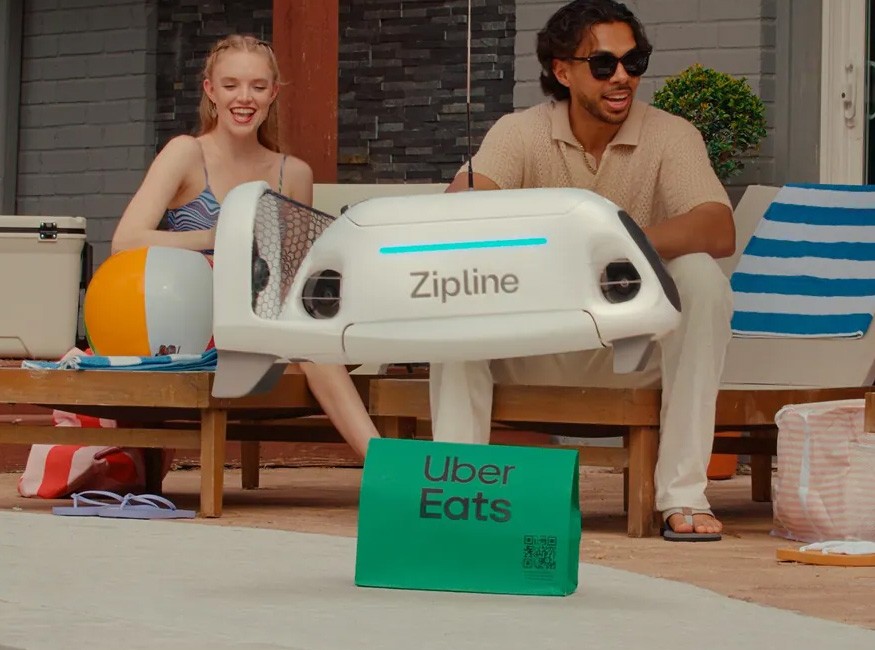
Drone delivery has been a demo for ten years. The tech was never the problem. The app was. Now it sits inside something millions of people already use. The goal? A million drone deliveries a day.
Texas only? For now.
Coming closer? Count on it.
7. One Guy Rebuilt All of Paris With OpenAI's New Model. What Could You Build?
One guy. One city.
OpenAI released new models this week. The charts are boring. The demo is not. Thomas, a developer at OpenAI, had the model build the whole of Paris as a world you walk through in your browser.
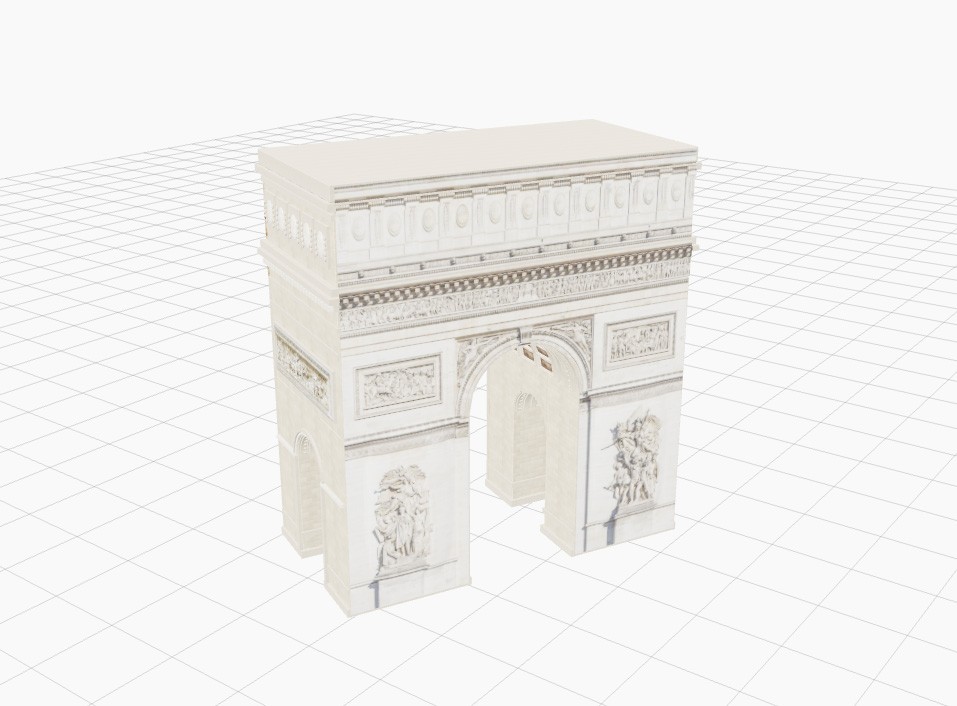
More than 131,000 buildings, made from public French map data.
Arrow keys. Champs-Élysées.

A walkable copy of a capital used to be a city project with a budget and a committee. Now one person makes it to show off a launch. If you own data about anything physical, you own the raw material.
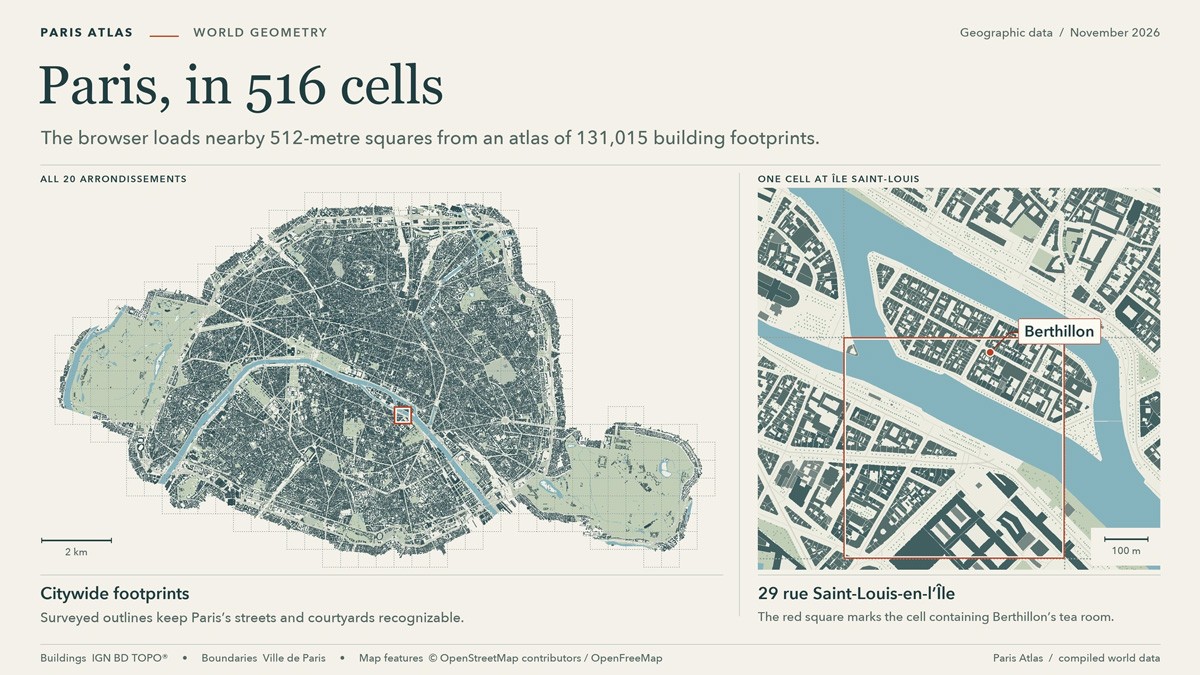
A demo? Yes.
A sign of what is coming? Oh yes.
BONUS. Voyager 1 Is Now a Full Light-Day From Home. And It Has Gone Quiet.
This one got me.
Voyager 1 left Earth in 1977. This week it reached a distance of one light-day. 25.9 billion kilometres. A message from home now takes 24 hours to get there.
And just days before the big moment, it stopped sending data. Only a faint signal is left.
Still there. Just not talking.
Almost fifty years. Built before the PC. Kept alive by people who never gave up on it.
We opened with a spaceship that came home. We close with one that never will.
Call when you can, old friend.
THINGS NOT TOO WEIRD, BUT STILL WORTH READING
- An AI pop star won artist, song and album of the year at the first AI Music Awards. Her lyrics were written by a woman called Nikki.
- A leukaemia vaccine added more than nine months of survival in its final trial.
- Telia, Nokia and KTH teamed up to bid for a Nordic AI gigafactory. The Swedish site is not picked yet.
- Google signed up to power data centres with heat from volcanic rock.
- 151 humanoid robots danced in sync in Shenzhen. New world record. The old one lasted a month.
Eight ways to supercharge your Monday
- Ask the newest person on your team which of your rules makes no sense. Listen.
- Write down the one problem your company calls too big to solve. Give it to an AI today and see how far it gets.
- Name one thing you make that customers truly look forward to. If you can't, start there.
- Pick one product feature. Ask if the shape could do the job instead of the electronics.
- List three tasks that are too small or too fiddly to automate. Keep the list. It will get shorter.
- Time your delivery from order to door. Then imagine it at ten minutes.
- Find one data set about your physical business. Ask someone to make it visible this week.
- Find the oldest thing in your company that still works. Thank the person who looks after it.
This week the future landed a spaceship. Hard to beat. But next week will try.
Subscribe if you haven't. Forward it if you liked it.
With love
Johan
Johan Ronnestam is a Swedish futurist, entrepreneur and keynote speaker. He helps leaders and brands grow in an AI-shaped world. ronnestam.com