



St Eriksplan 3
113 21 Stockholm
Sweden
Hey all. Another week, another deep dive into things proving the future has no intention of calming down.
A duck learns. A muscle moves. A gene edit lasts. And software starts disappearing.
Small robots. Big biology. Fewer screens.
I love it.
Let’s get weird.
1. Hugging Face Puts Reinforcement Learning in a $399 Duck
Robotics has spent years trying to impress us with humanoids that run, lift boxes and occasionally fold towels.
Hugging Face chose a duck.
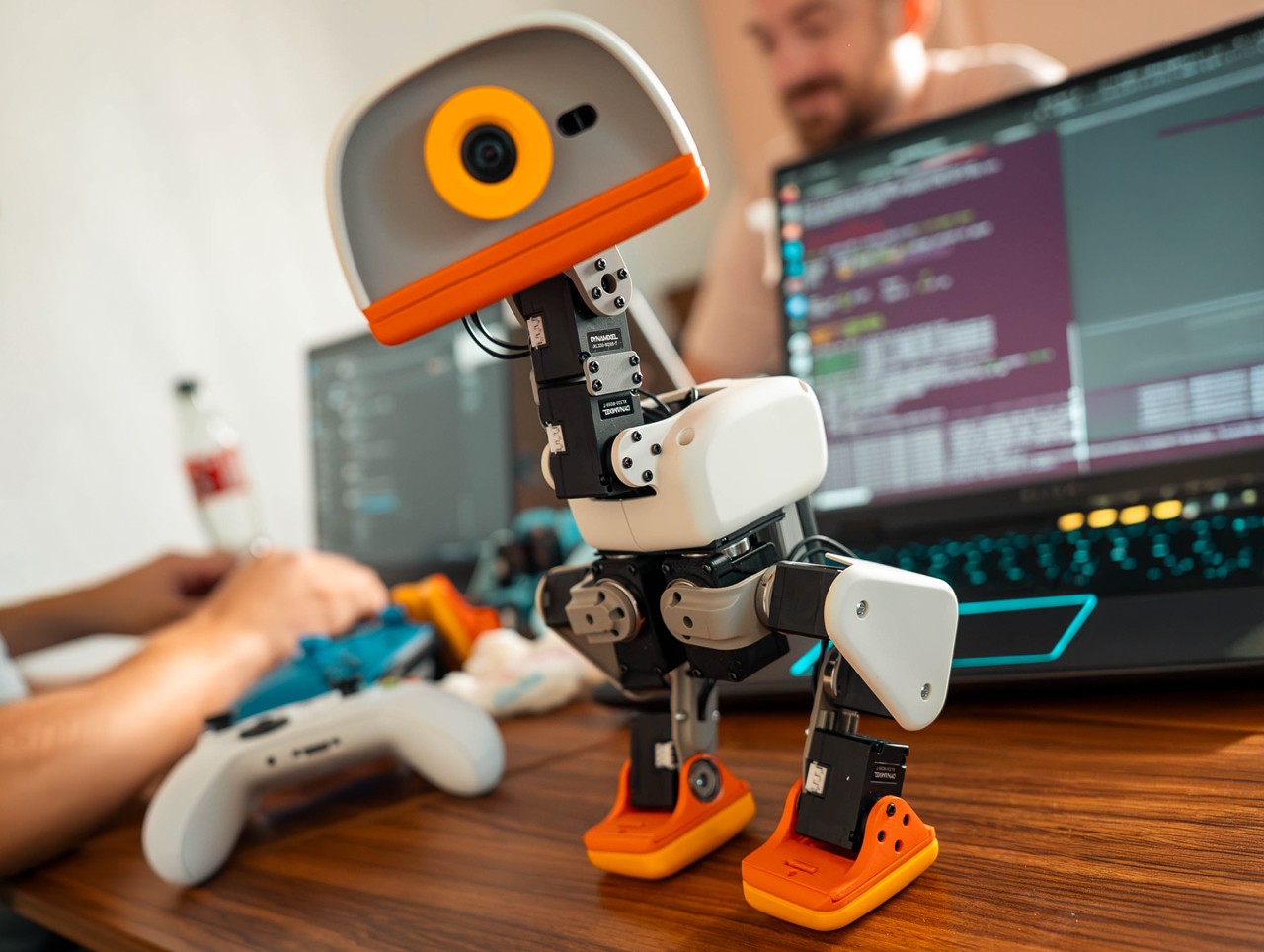
On 27 August, Hugging Face and Pollen Robotics opened pre-orders for Microduck, a 25-centimetre open-source robot with 15 motors, a camera, lidar, two motion sensors and a beak that doubles as a gripper.
It waddles, crouches, gets back up when it falls and roller-skates.
Behaviours can be trained through reinforcement learning in simulation, then transferred into the physical robot. First deliveries are targeted before Christmas.
Of course, nobody needs a robot duck.
That might be the point.
Last year, the same team launched Reachy Mini, a $399 desktop robot built for playing, coding and experimenting with AI. Disney has taken a similar route with its expressive BDX droids, turning robotics into character, movement and entertainment.
Robotics may enter our homes as toys before it arrives as labour. Play makes complicated technology approachable. Character makes machinery welcome.
Your next robotics engineer may currently be twelve years old, teaching a duck to dance badly.
I don't know about you? But I'm definitely getting one!
2. Scientists Implant a Muscle That Exercises While the Mouse Does Not
Researchers created self-contracting muscle tissue and implanted it beneath the skin of mice.
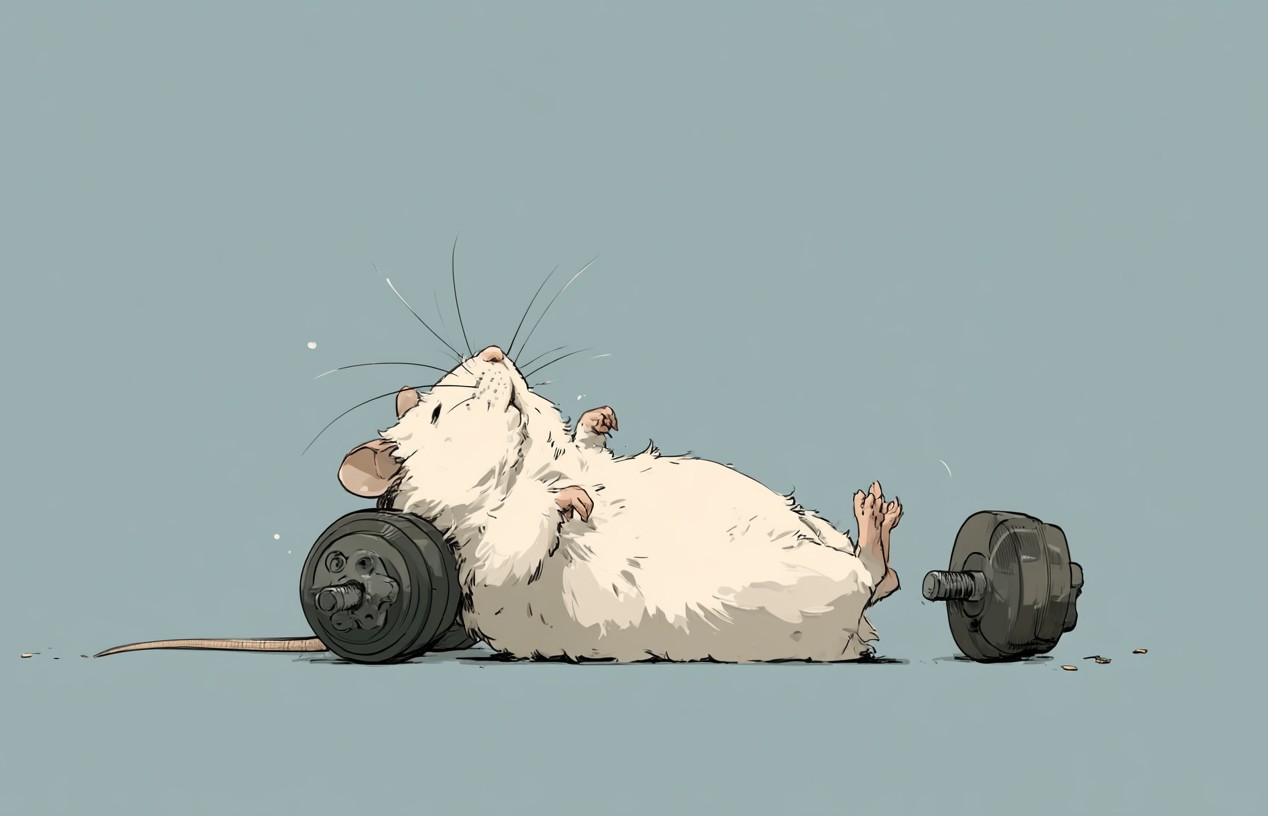
The tissue formed blood vessels and kept contracting without external stimulation. Older mice developed more lean mass, stronger grip and higher bone density. Obese mice showed lower blood glucose, reduced inflammation and less liver damage. Some even performed better in maze tests.
It is a proof of concept in mice.
Nobody is selling surgical Pilates yet.
But the idea is fascinating: what happens when part of the benefit of a behaviour can be delivered as a product?
The health industry spends billions persuading people to exercise, sleep, eat better and remember their medication. If technology can produce part of the outcome without requiring the behaviour, the category changes.
3. One CRISPR Infusion Cuts LDL Cholesterol by 53 Per Cent
In a small first-in-human trial, one infusion of the CRISPR therapy CTX310 reduced LDL cholesterol by an average of 53 per cent at the highest dose.
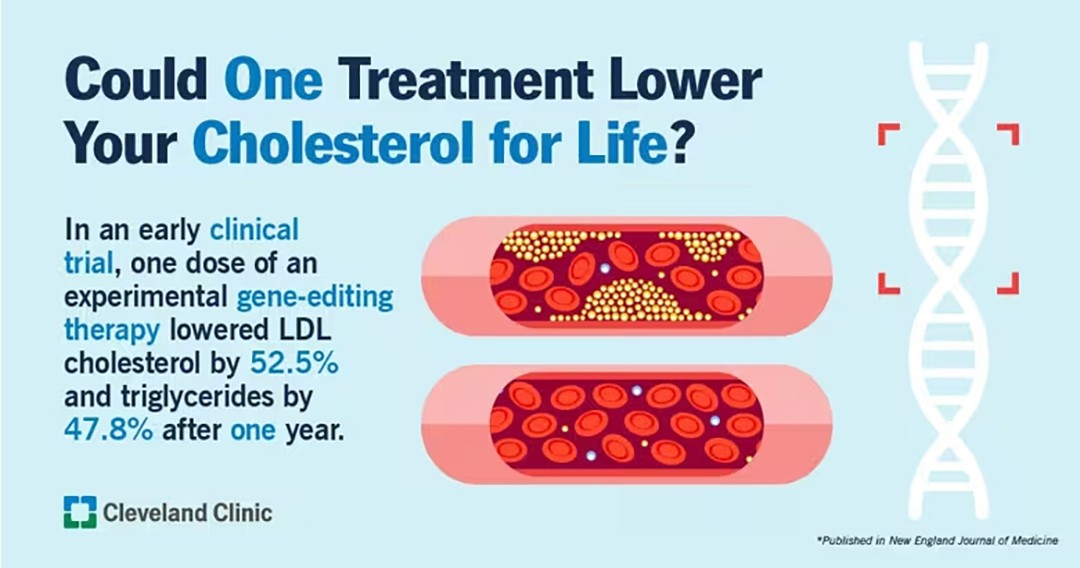
Triglycerides fell by 48 per cent. The effect was still holding one year later, and researchers reported no treatment-related serious adverse events.
This was phase one, involving only fifteen patients. Considerably more evidence is needed.
Still, one treatment potentially replacing years of pills creates an interesting business problem. Most chronic-care companies earn money from repetition. Another prescription. Another monthly box. Another reminder to renew. CRISPR asks what happens when the customer’s problem is fixed once.
Bad for recurring revenue.
Excellent for humans.
4. Anthropic Gives AI a Common Plug for the Physical World
Anthropic launched a research preview of the Model Hardware Standard, a shared specification intended to help AI agents operate microscopes, liquid handlers, robotic arms and other specialised equipment.
Today, connecting machines in laboratories and factories often requires weeks of custom integration. Anthropic says the standard can reduce parts of that work to hours or minutes.
It is essentially USB-C for AI and physical machines.
That sounds less exciting than a roller-skating duck.
It may be considerably more important.
Standards become powerful when nobody notices them anymore. If Anthropic helps define how AI communicates with scientific and manufacturing equipment, it is no longer simply building a clever assistant. It is building plumbing for the physical economy.
Which piece of equipment in your organisation still speaks a language nobody else understands?
5. Salesforce Moves Its CRM Inside Claude
Salesforce has spent 27 years persuading companies to open Salesforce.
This week, it launched Salesforce inside Claude.
The plugin includes 37 sales skills. It can prepare meetings, examine deal health, update pipelines and act on live company data without the salesperson opening Salesforce itself.
That is either impressive strategic confidence or the beginning of a small identity crisis.
When the interface disappears, so does a large part of the visible brand experience. No familiar dashboard. No carefully designed navigation. No reassuring blue cloud.
What remains is data, rules, judgment and trust.
Software companies have spent years adding AI to their interfaces. Salesforce is testing a more uncomfortable idea. Perhaps the AI becomes the interface.
If customers never saw your interface again, what would remain of your brand?
THINGS NOT TOO WEIRD, BUT STILL WORTH READING
Here is some more good stuff from this week. Not quite enough room for the main stage, far too interesting to leave behind.
- Fitbit’s founders launched Luffu Link, a screenless LTE health and safety band built around caring for an entire family.
- IKEA and Xbox created gaming furniture that can live in an ordinary shared room without turning the home into a streaming bunker.
- Meta’s glasses now stop recording when the privacy light is covered, protecting the people around the customer from the customer.
- OpenAI used AI to help design its own inference chip in nine months. The software is now accelerating the hardware that accelerates the software.
Five uncomfortable questions for Monday:
- If the first billion household robots arrive as toys, which brands will teach us whether to trust them?
- What happens to a healthcare company built on lifetime treatment when one procedure removes the customer?
- If AI becomes the interface, are you still building a brand or merely supplying data to someone else’s?
- Which physical machine would you never allow an AI agent to control, and how long before someone connects it anyway?
- Are adults preparing to buy robots while children are already learning how to train them?
The future has left the screen.
Apparently, it walks like a duck.
With love
Johan
ps. To get in touch or hire Johan as your next Keynote Speaker – Send me a message or an email (google Johan Ronnestam Creative Studio)