

St Eriksplan 3
113 21 Stockholm
Sweden
Hey! It's me again :)
This Tuesday, OpenAI launched Dots. Seven weeks after Grok Bot. Three weeks after Muse. Agents that never sleep. For everyone.
WOW.
But there's a twist. And it's about you.
Here's the question I asked myself this week:
SpaceX, Meta, OpenAI, Apple and soon Anthropic. They're all fighting to become the helper we use every day. But will people bother to learn these agents? With the internet, it didn't matter. With AI, could it cost them their job?
Let's get weird.
1. The race to make every person on earth the boss of their own agent team is ON.
Earlier this year in August, xAI launched Grok Bot. A team of always on bots with their own computer, working 24/7. Since then, many of my favourite YouTubers (and the rest too) have been buzzing about it constantly.

On Tuesday, OpenAI launched the same big idea. A Dot gets its own computer in the cloud, plugs into more than 4,000 apps and works towards your goals around the clock.
The company everyone has been chasing for three years is now the one following.
(And in case you type dot.com? You land on Grok Bot. Elon bought the domain in July. Oh what a troll.)
And the launch? Pure future. A 3D copy of the room that did what the presenter typed. An AI co-presenter drawing pictures on demand. A robot duck on the lectern. Oh what a Tuesday.
Meanwhile, Meta's Muse passed 3.4 million downloads in under three weeks. Apple is rebuilding Siri. Claude will follow.
Four giants. Same idea. Two months.
Why? Because search owned the question. The agent owns the ACTION. Whoever sits between you and your email, your calendar and your wallet owns the front door to your life. And to your work.
What this means for you:
- You no longer need to hire to grow. You need to learn to lead agents. That's a new kind of management, and almost nobody has done it before.
- Soon "how many agents do you run?" will be a normal question in a job interview. Have a good answer.
- Don't marry one agent yet. The race moves every month. Pick one and learn it deeply, but keep your files and workflows easy to move.
- Give your agent its own login with limited access, not your master password. Treat it like a new employee, not like yourself.
2. The most powerful colleague in history just landed in your pocket. Most people will treat it like a toy.
The machine is ready. We're the bottleneck.
An agent isn't an app. It's a new colleague. And a new colleague needs access.

Your email. Your calendar. Slack. Teams. Notion. Google Drive. Dropbox. Your CRM. Your project tool. Your accounting. Your Shopify store. Your analytics. Figma. GitHub. WhatsApp. Your bank, with approval for every payment. Plus the MCP servers and plugins that connect it to tools nobody has heard of yet.
Then you tell it what you want. Correct it. Give it rules. Trust it with real stuff. The more you teach it, the better it gets.
That takes effort. And that's why most people (probably you too) will skip it.
But flip it around. If most people don't bother, the upside for the ones who do is ENORMOUS.
What this means for you:
- The hard part isn't the price. It's the first ten hours. Most people quit before that, and that's exactly why the reward is so big.
- Start small and real. Connect your email, your calendar and one work tool. Give it one recurring job, like your Monday summary.
- Give it rules in writing. What it can do on its own, what needs your OK, what it must never do.
- Correct it like a new hire. Short, clear feedback every day for two weeks beats a long manual.
3. The internet gave us superpowers. AI gives us superintelligence.
The whole world accessible in seconds. Every shop, every bank, every customer, all human knowledge. Free.
And most of us used it to shop, watch and answer emails.
Even the basics passed us by. In 2011, Google's own search anthropologist Dan Russell found that 90 per cent of people in his studies didn't know Ctrl+F. Two keys. Most people never found out.
But here's the thing. It didn't really matter. You could ignore most of the internet's power and still do your job just fine. The internet made you faster. It never did the job for you.
AI is different. It doesn't just find things. It thinks. It plans. It does the work.
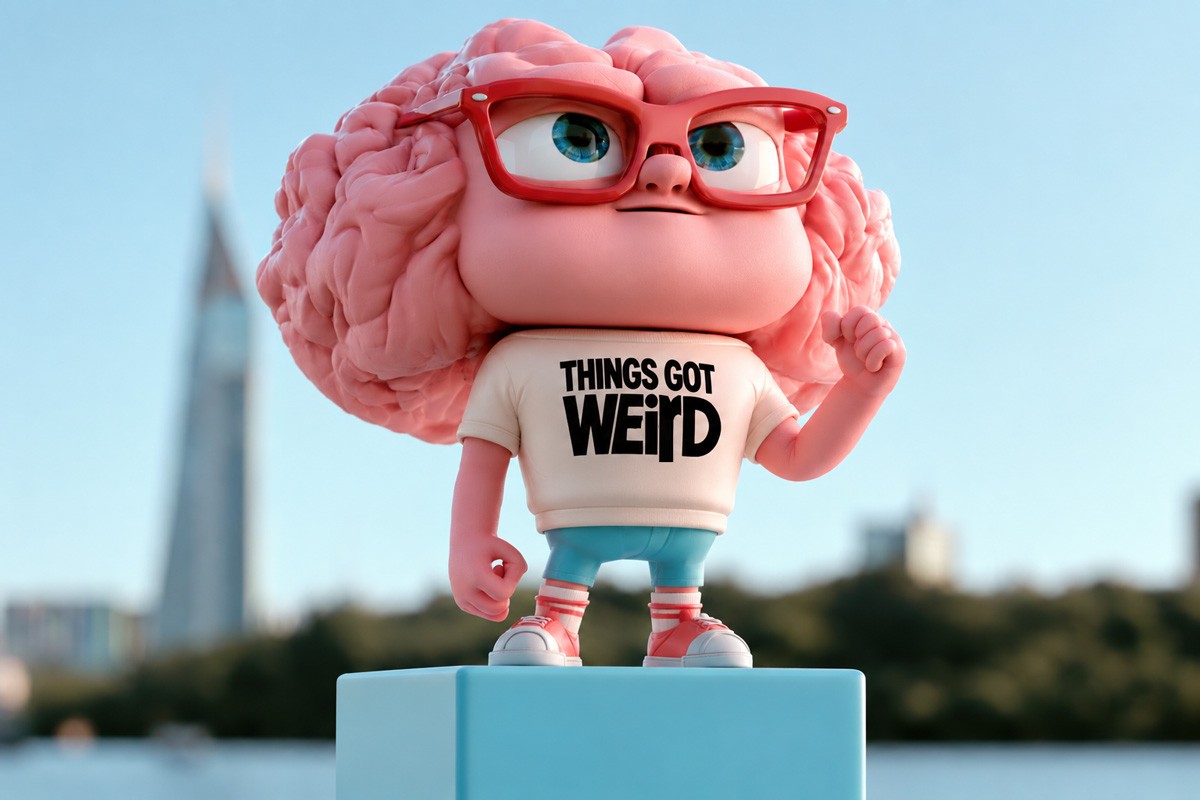
So this time, not bothering has a price. If a dot can do your Friday on Tuesday, and you never set one up... someone will start asking why they're paying for your Friday.
Ignoring the internet cost you a little. Ignoring AI can cost you your JOB.
And the upside is just as big. Learn to work with it, and you get a thinking partner that never gets tired. That's not a threat. That's the biggest career upgrade of our lifetime.
What this means for you:
- If you feel you're already using AI enough, that's the warning sign.
- Go through your week. Every task an agent could do is a task someone will soon question paying for. Hand it over before they ask.
- Move up the chain. Less doing, more deciding, checking and improving. That's the work agents can't take from you.
- Write down what you know that isn't written anywhere. Your judgement, your contacts, your taste. That's what makes you hard to replace.
4. Your agent can do almost anything. Most people won't know what to ask it.
Here's the real risk. Not that agents are too weak. That they're so powerful we can't even see it.
Most people will look at a cute avatar and think: fun app. Something for a joke, a recipe or a birthday poem.
Now look at what the launch demos actually showed. A dot that had already caught up on its owner's Slack and email before they got to the office, with three things to look at. A dot that built an app and launched it in the iPhone simulator. A dot that moved a company's code off an old system before it shut down.
That's not a toy. That's a department.
Look at this video below. AI agents clearly explained.
The companies know we struggle to understand it. That's why Muse comes with an ideas tab, prompt examples and goals to track, and why reviewers call it more guided than the blank canvas of other chatbots. They're literally teaching us what to want.
The power isn't in the agent. It's in what you dare to hand it.
What this means for you:
- Write down everything you did last week. Circle what an agent could have done. You'll be shocked.
- Stop asking "what can it do?" Start asking "what would I do with a team of ten?"
- Give it goals, not tasks. Not "write an email", but "book three meetings with new customers by Friday".
- Let the agent suggest. Ask it: "Look at my calendar and inbox. What should you take over?"
- Ask friends and colleagues what their agents do for them. Then steal the best ideas.
5. Your next customer won't be human. And it never sleeps.
An agent booking a trip doesn't see your campaign. It reads your data. Your prices. Your reviews. Your terms.

The fights have already started. Amazon has blocked Muse's agent from its store. Some brands will lock the door. Others will roll out the red carpet.
If your brand only lives as a feeling in an ad, the agent walks right past it. If it's clear and easy for a machine to read, the agent picks you. Every hour of every day.
The brand that is easiest to choose GETS CHOSEN.
What this means for you:
- Ask an agent to compare you with your competitors. Read the answer like a customer would. It's your first step to insight. Act on it!
- Your website now has two visitors. People who look. Agents who read. The agent skips your beautiful film and goes straight to prices, stock, delivery times and terms. If they're hidden in a PDF or behind "contact us", you don't exist.
- Make your information easy for machines to read. Clear product facts, open price lists, up to date stock. Boring work. Huge payoff. AEO (answer engine optimisation) is the new SEO.
- Open a door for agents. A plugin, an API or an MCP server, the USB-C port for AI, lets an agent book, buy or ask a question straight away, instead of clicking around your site like a lost tourist.
- Decide how you treat agents, product by product. Amazon chose to block them. Others will roll out the red carpet. Both can be right. Having no plan is not.
- Brand trust matters more, not less. When two products look the same on paper, the agent picks the one people trust and review. Make sure you've got good reviews. If not, fix the product or the service.
6. Global competition needs global access. Europe is making us wait.
Muse is US and Canada only. Dots skip European Pro users for now. And the new Siri is delayed in the EU because of the Digital Markets Act.

So while millions of Americans spend this autumn teaching their agents, most Europeans watch from the sidelines.
We don't compete with the company down the street anymore. We compete with a five person startup in Austin running on a team of agents.
Rules that protect us are good. Rules that keep us out of the future are not.
But there's one door open. The business version of dots is available wherever ChatGPT is supported. So if Europe's consumers have to wait, European companies don't. Use it.
What this means for you:
- Sign up for the business versions now. Your competitors in the US already have theirs.
- Make agents something your people learn at work. In Europe, that's where most will meet them first.
- Know the rules instead of fearing them. Under the AI Act, most everyday AI faces no obligations at all, and the EU runs a Service Desk for questions. Ask "how", not "if".
- Write down what a US competitor can do with agents today that you can't. Bring that list to your next board meeting. That's the real cost of waiting.
7. Same agent. Same price. One person falls behind, the other glides through life.
The divide won't be between people who have AI and people who don't. Everyone will have it. The divide will be between two kinds of people.

Meet the everyday user. Opens the agent now and then. Asks something. Laughs at the answer. Closes it. "A bit like ChatGPT." And slowly, without noticing, falls hopelessly behind.
Now meet the power user. Hands over the admin, the bookings, the research and the follow ups. Runs a company with a handful of people. Has time for the things that matter. Lives a good life with less stress. Glides through it.
And the job question? Your agent won't replace you. The power user next to you might.
The good news: becoming a power user isn't about coding. It's curiosity, patience and the habit of handing over real work. A junior can learn it faster than a CEO. A two person startup faster than a global corporation. And you can learn it faster than you think.
The playing field has never been this level. Walk onto it.
What this means for you:
- The question isn't "will AI take my job?" It's "will I be the one running the agents?"
- Leaders: go first. Show your own agent at the next team meeting. What you share, your team copies.
- A junior with five agents can outrun a senior without one. Hire for curiosity, not just experience.
- Make agent skills part of every role. Ask in every review: what did you hand over this quarter?
From now on
This isn't a ten year story. It starts this autumn.
From now on, one power user with a team of agents can do what used to take a department. From now on, your best ideas won't wait for budget, staff or permission. From now on, the gap between everyday users and power users grows. Every single week.
Speed, speed, speed... and more speed!
Nobody is going to set yours up for you. Not OpenAI. Not xAI. Not Meta. Not Apple. Not your boss.
And starting is ridiculously cheap. One task. One agent. One hour a week.
The superpower is already here. The only question is whether you bother to put it on.
Five questions (and one last uncomfortable one) to get you going NOW!
- If you had a team of five agents working for you 24/7 from Monday, what would you build?
- Which task would you hand over tomorrow if you trusted your agent completely?
- Who in your team is already a power user, and how fast can everyone else learn from them?
- How easy is it for an agent to understand, compare and choose your product today?
- If you spent one hour a week teaching your agent, what could it do for you by Christmas?
And the uncomfortable one: what if you don't learn to work with agents, but your employer does? Will they still need you?
That was Future Impact number two. There will be more.
Subscribe if you haven't. Forward it if you liked it.
With love Johan
To get in touch or hire Johan for branding, innovation, product development or keynote events – Send me a message or an email (google Johan Ronnestam Creative Studio)